
RDF Mounted Search and Rescue Gear: Enhancing Rescue Operations Through Flexible Deployment
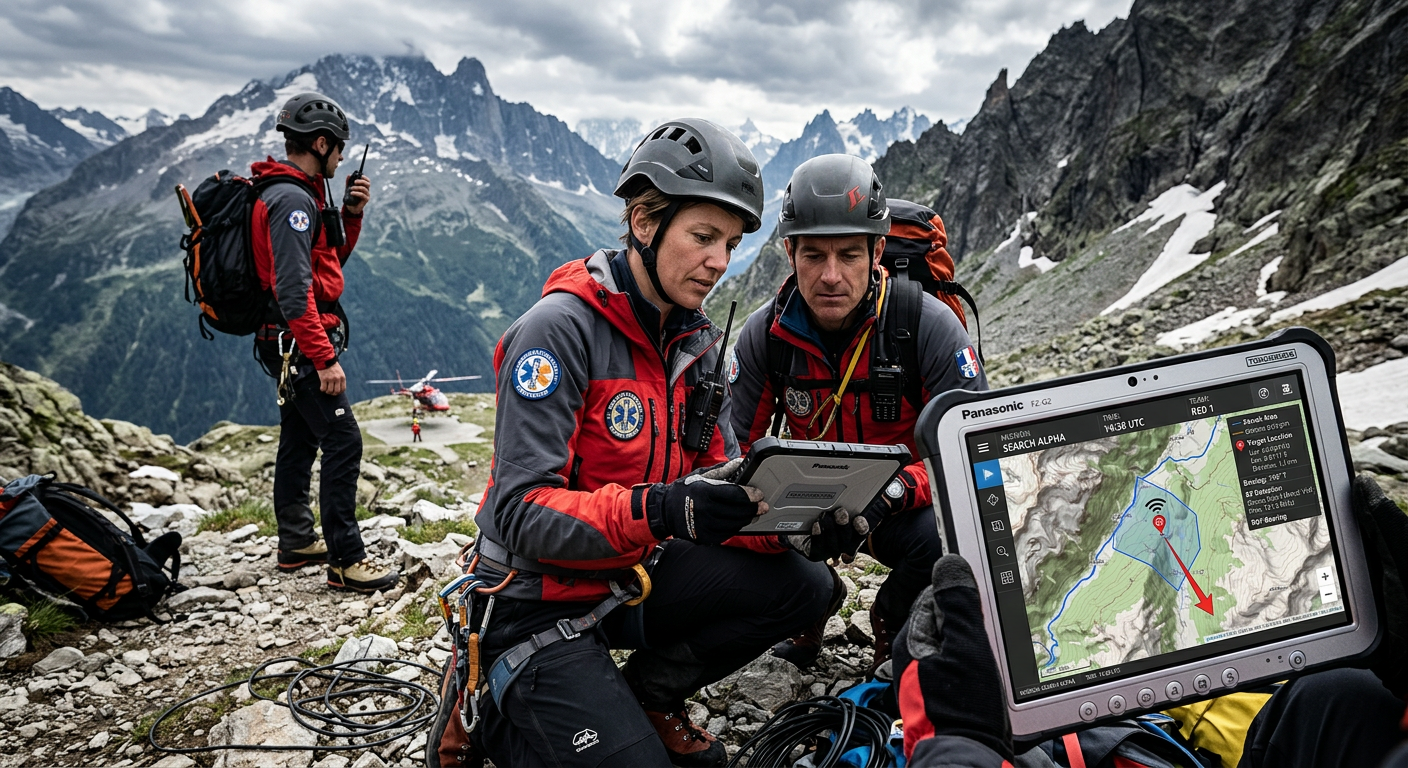
Search and Rescue teams operate in some of the most demanding environments imaginable. From dense forests and mountain ranges to disaster zones and urban emergencies, responders require technology that is both adaptable and effective. As rescue organizations seek innovative tools to improve mission outcomes, RDF mounted search and rescue gear is becoming an increasingly important part of modern emergency response strategies.
The SAR App combines Radio Direction Finding, RF Detection, AI-powered visualization, and flexible deployment options to provide rescue teams with a powerful operational advantage. Designed to integrate seamlessly with existing workflows, the platform helps responders locate missing persons faster while improving situational awareness and operational efficiency.
The Importance of Flexible Search and Rescue Equipment
Every Search and Rescue mission presents unique challenges. Rescue teams often need equipment that can adapt quickly to changing conditions and different operational environments.
Traditional search methods continue to play an important role, but modern rescue operations increasingly benefit from technologies capable of collecting and analyzing wireless signal intelligence. Many missing individuals carry smartphones, smartwatches, Bluetooth devices, and other electronics that emit detectable signals.
The SAR App leverages these signals to provide responders with additional information that supports faster and more accurate search efforts.
Modular Architecture for Maximum Deployment Flexibility
One of the most valuable features of RDF mounted search and rescue gear is its deployment versatility. The SAR App transforms rugged Android devices into mobile Radio Direction Finder systems that can be mounted across a wide range of rescue platforms.
Deployment options include:
- Drones and UAVs
- Search and rescue vehicles
- Survival vests
- K9 harnesses
- Portable command units
- Field responder equipment
Because the platform is hardware-flexible, organizations can integrate the technology into existing rescue operations without investing in specialized infrastructure.
This adaptability makes the system suitable for agencies of all sizes and mission types.
Drone-Mounted RF Scanning Improves Coverage
One of the biggest challenges during Search and Rescue operations is efficiently covering large search areas. Drone-mounted RF scanning technology provides a significant advantage by enabling operators to collect real-time signal intelligence from the air.
This capability allows teams to:
- Search larger operational zones faster
- Improve aerial coverage efficiency
- Detect wireless activity across difficult terrain
- Reduce repetitive manual searches
- Prioritize high-probability locations
The result is a more efficient search process that helps responders locate subjects more quickly.
Faster Decision-Making Through AI-Powered Visualization
Raw RF signal data can be difficult to analyze during active rescue missions. To address this challenge, the SAR App automatically converts signal detections into simplified visual displays.
The platform provides:
- AI-powered heatmaps
- Signal concentration zones
- Distance indicators
- Real-time detection information
- Visual search intelligence
These tools help operators understand search conditions quickly and make informed tactical decisions under pressure.
By simplifying data interpretation, the platform enhances operational awareness while reducing analysis time.
Reducing Operator Workload During Critical Missions
Search and Rescue personnel often work in stressful environments where every decision matters. Interpreting complex RF information manually can increase workload and slow response times.
The SAR App automates much of this process by presenting information in an intuitive format that responders can immediately understand.
Benefits include:
- Reduced cognitive workload
- Faster tactical decisions
- Improved team coordination
- Enhanced mission efficiency
- Lower responder stress levels
This allows rescue teams to focus on mission objectives rather than technical data analysis.
Supporting Diverse Rescue Organizations
The versatility of RDF mounted search and rescue gear makes it valuable for many different types of rescue operations.
Wilderness Search and Rescue
Large forests, remote terrain, and mountainous regions can be searched more effectively using mobile RF Detection technology.
Urban Search and Rescue
Signal intelligence helps responders navigate complex city environments and prioritize search areas.
Coast Guard Operations
Maritime rescue teams can deploy mounted RF Detection systems across vessels, vehicles, and aerial platforms.
Disaster Recovery Units
Following natural disasters, signal detection can assist teams locating survivors in challenging environments.
K9 Search and Rescue Teams
Mounted systems can be integrated directly into canine operations, improving coordination and situational awareness.
Volunteer Rescue Organizations
Mobile deployment capabilities make the platform accessible to organizations with limited infrastructure requirements.
Why Mounted RDF Technology Is Transforming Search and Rescue
Modern rescue organizations face increasing pressure to improve response times while managing resources effectively. Mounted RF Detection technology offers several key advantages that support these goals.
These include:
- Improved locate probability
- Faster search completion
- Greater aerial coverage
- Enhanced situational awareness
- Flexible deployment options
- Reduced operator workload
- Better resource utilization
By combining mobility, adaptability, and advanced signal intelligence, RDF technology is becoming an essential component of modern Search and Rescue equipment.
The Future of Search and Rescue Operations
As technology continues to evolve, rescue organizations are increasingly adopting solutions that provide actionable intelligence in real time. Mounted Radio Direction Finding systems allow teams to gather critical information without disrupting existing workflows.
The ability to deploy RF Detection technology on drones, vehicles, K9 units, survival gear, and portable equipment ensures that responders can adapt quickly to any operational environment.
This flexibility is helping transform the way Search and Rescue missions are conducted worldwide.
Conclusion
Organizations researching RDF mounted search and rescue gear require solutions that are flexible, effective, and easy to deploy. The SAR App delivers these capabilities through advanced RF Detection, Radio Direction Finding technology, AI-powered heatmaps, drone integration, and mobile deployment options. By reducing search time, improving locate probability, increasing aerial coverage efficiency, and lowering operator workload, the SAR App provides a modern and scalable solution for today’s Search and Rescue professionals.

FURTHER READING...




Latest - post



CONTACT US
Category
- blog (277)
- Bookkeeping (5)
- Business (210)
- driving (5)
- Environment (5)
- Home (74)
- Industrial Equipment (1)
- IT Security & Payment Solutions (1)
- Marketing (8)
- Medical (13)
- Relationship (4)
- Trade Show Displays (1)
- travel (5)
- Wedding Photography&Event (1)
